
Today I present below two important pieces for your reading.
First, Trudy Rubin of the Philadelphia Inquirer did it again. Her analysis of what is being presented in peace talks is right on, and you should read it – when you do, you will want to use her word – “baloney.”
The second article is from today’s The Washington Post and was written by Democrat Senator Jeanne Shaheen of New Hampshire and Republican Senator Mitch McConnell of Kentucky. They successfully take on the erroneous propaganda theme that says Russia is winning.
The U.S.-Ukraine Foundation’s Friends of Ukraine Network (FOUN) said that starting in 2021, the United States needs to commit unequivocally to the strategic goal of Ukraine’s full liberation and Putin’s defeat.
Still, through Administrations of both political parties, Washington has never developed any strategic objective, and needlessly, the war continues, people continue to die, and Ukrainian children continue to be abducted as part of Putin’s strategic plan.
We probably all know Winston Churchill’s famous line, "You can always count on Americans to do the right thing, after they have tried everything else."
It is time to stop trying everything else and make certain Ukraine has what it needs to defeat the Russian Federation.
____________________________________________________________

Susie Wiles reveal: Trump thinks Putin wants all of Ukraine
It's time for real U.S. peace talks that pressure the Kremlin instead of leaning on Kyiv.
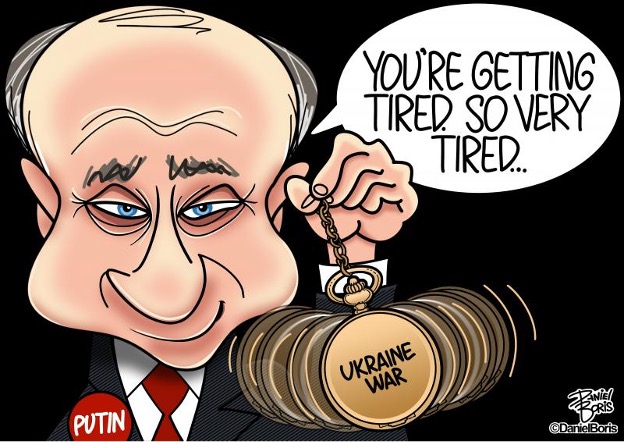
by Trudy Rubin | Columnist
Published Dec. 20, 2025, 5:00 a.m. ET
During the Christmas holidays, the word peace makes a frequent appearance, in sermons and carols and frequent performances of Handel’s Messiah, with its glorious Hallelujah Chorus praising “the Prince of Peace.”
That makes it even more infuriating to watch President Donald Trump demanding that Ukraine (and American’s European allies) agree to a so-called peace deal by the new year that guarantees more war and killing. Equally depressing is to watch much of the media buy the premise that the U.S. and Russia are actually conducting peace talks.
Baloney. What is going on in Berlin, Miami, Washington, and Moscow is a Trump-led farce. Ukrainian President Volodymyr Zelensky and European leaders are forced to play along lest POTUS cut off crucial U.S. intelligence sharing and halt critical (but limited) sales of U.S. weaponry. They know Trump seeks a deal, any deal, even one on Kremlin terms, in order to claim he achieved peace in Ukraine. Yet the gleam of a Nobel Peace Prize and rare earth business deals with Moscow override any concerns about helping Moscow crush Kyiv.
Vladimir Putin, on the other hand, has shown no interest in negotiating, but just waits for more Trump concessions. Any deal that protects Kyiv’s future will be rejected by Vladimir Putin, but Trump, following past practice, will likely blame Ukraine.
That is why many more Americans, and security conscious Republicans in Congress must recognize that Trump is no worldly prince (or king) of peace. Rather, he is a poseur who must be prevented from sacrificing Ukraine on the altar of his ego and endangering the security of Europe and the United States.
You doubt me? Then read Part Two of the notorious Vanity Fair interviews with Trump’s chief of staff and right-hand woman Susie Wiles, in which she revealsTrump’s mindset regarding Ukraine. Despite debates within Trump’s team over whether Putin wants the whole of Ukraine, she admits, “Donald Trump thinks he wants the whole country.” [Truly astonishing that this is news. The President of the United States thinks Putin wants all of Ukraine. No one in their right mind has doubted this since at least the beginning of Putin’s full-scale invasion. RAM]
In an interview with Vanity Fair, White House chief of staff Susie Wiles said of the president's talks with Vladimir Putin about Ukraine: “Donald Trump thinks he wants the whole country."
Vanity Fair asked Secretary of State Marco Rubio if he felt the same. He responded that, after watching Putin repeatedly reject freezing the war at the line of conflict, “You do start to wonder, well, maybe what this guy wants is the entire country.” Presumably, the secretary has bothered to read Putin’s speeches in which the Kremlin leader has said over and over again that Ukraine has no right to be a state,
However, Rubio has been pushed aside as negotiator in favor of the supremely naive and ill-informed real estate mogul Steve Witkoff, who keeps insisting Putin wants peace, an argument repeated by POTUS. Trump initially signed off on a 28-point “peace” plan that was handed by a Putin emissary directly to Witkoff.
Even though Zelensky and European leaders have gotten some of the most egregious points eliminated, the two biggest obstacles still remain: Putin’s demand that Kyiv turn over critical territory that Russia hasn’t been able to capture in nearly four years, and strategic guarantees of Western military aid to prevent Russia from violating any agreement.
On both sticking points, the Trump negotiators continue to play into Putin’s hands.
On the question of territory, what Putin demands is that Kyiv turn over a belt of fortified cities on high ground in the Donetsk region. Moscow has been unable to make major territorial gains in this area since near the beginning of the war, and the gains they have made have incurred terrible Russian casualties.
This belt “is not easy to conquer because [its cities are] well fortified militarily and naturally due to the landscape,” I was told by Yehor Cherniev, deputy chairman of the Committee on National Security and Defense of the Ukrainian parliament. “It would cost the Russians thousands and thousands of lives and months if not years to take it. I don’t see any compromise on this.”
Yet Putin has persuaded Witkoff to demand that Kyiv turn it over for nothing, which would leave the flat farmlands of central Ukraine open to further Russian attack.
Compounding the insult, Witkoff has proposed that the area be made into a “demilitarized zone” from which Ukrainian troops would withdraw but Russian troops not enter. No one who has read anything on recent history could be unaware that Putin has zero respect for such nonsense. “We know the Russians would just use this to infiltrate soldiers in civilian clothing and then seize control of the area,” Cherniev said by phone from Kyiv. “It would just be a trap.”
The second, enormous sticking point, concerns security guarantees for Ukraine in case Putin violates any agreement.
Putin has broken every accord Russia has signed with modern-day Ukraine. This includes, most notoriously, the 1994 Budapest Memorandum, in which Ukraine handed over its Soviet-era nuclear weapons in return for pledges from Moscow, Washington, and London that Kyiv’s sovereignty would be respected.
No wonder Zelensky insisted on Monday: “There is one question I — and all Ukrainians — want to get an answer to. If Russia again starts a war, what will our partners do?”
Putin has made clear he accepts no NATO membership, no Western military guarantees and only a shrunken, disarmed Ukrainian military. As for the Witkoff team, they concur on no NATO membership for Ukraine, but have offered only puffery in its stead.
The big headline has been that Trump would agree to “Article 5-like” guarantees, a reference to the provision in NATO that an attack on one requires help from every member. But Trump has played up the ambiguity of Article 5, which doesn’t specify that the help needs to be military. “Depends on your definition,” he said in August. “There’s numerous definitions of Article 5.”
A member of Ukraine’s parliament said of Russian plans for a demilitarized zone: “It would just be a trap.”
Moreover, Sen. Lindsey Graham (R., S.C.), a golf buddy of Trump, has made clear, that even if the Senate approves security guarantees, it wouldn’t be a treaty but “a congressional blessing, statutory in nature.”
A “blessing” won’t help Ukraine if Russia pauses, regroups, and attacks again.
It fascinated me that, after revealing Trump’s awareness of Putin’s goals, Wiles told Vanity Fair she thought Trump’s greatest achievement of 2025 was acting as “an agent of peace.”
The president’s claim that he ended eight wars is braggadocio: No wars were ended, including in Gaza, where a ceasefire is tottering. The list includes long-standing disputes that remain and outbreaks of fighting that continue, and even a Pakistan-India outbreak, where New Delhi denies Trump played a role in settling it down.
But if POTUS wants to be known as a peacemaker in Ukraine, it will only happen if he helps Ukraine convince Putin that a unified West will not permit Russia to crush Ukraine. That would require arming Ukraine to the hilt with U.S. and European weapons paid for by Europe, backed with frozen Russian assets or the European Union’s shared budget. It would also require U.S. enforcement of current and future sanctions, which the White House isn’t doing.
Most of all it would require Trump to pressure Putin, which he shows no signs yet of doing. The Russian despot is vulnerable economically and militarily, and Ukraine won’t lose if POTUS doesn’t betray the country. But Putin will only be persuaded to cease fire if Trump joins Europe in convincing him he can’t afford to continue the fight.
_______________________________________________________________
The Washington Post
Russia isn’t winning. Putin wants to fool you.
Putin’s hope is that U.S. will somehow convince itself that Ukraine can’t succeed. Don’t fall for it.
December 22, 2025 at 6:00 a.m. EST Today at 6:00 a.m. EST
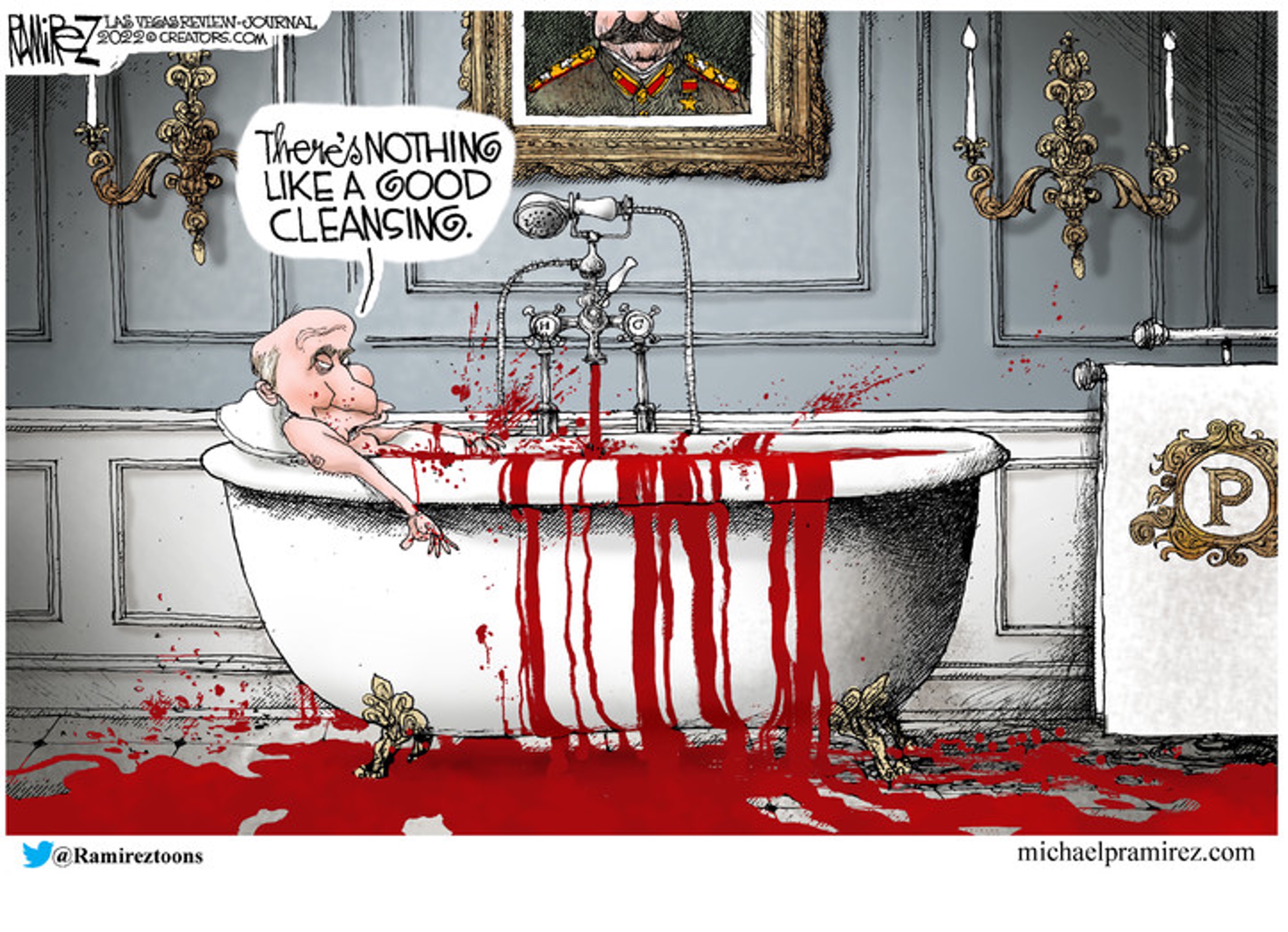
By Jeanne Shaheen and Mitch McConnell
Jeanne Shaheen, a Democrat from New Hampshire, and Mitch McConnell, a Republican from Kentucky, are members of the U.S. Senate.
In the early days of Russia’s invasion of Ukraine in February 2022, the Biden administration gave Congress its assessment of Ukraine’s ability to hold back Russian forces. The projection was bleak. Kyiv, they said, would fall in weeks, if not sooner.
Yet, the Russian tanks that attempted to topple Ukraine’s democratically elected government were either destroyed or forced to retreat. By April, not only had Putin failed to install a friendly government in Kyiv, his military couldn’t secure a foothold anywhere near Ukraine’s capital. Instead, Ukraine successfully confined Russia’s troops to the far east of their country, where Russia has tried to steal territory since 2015.
After almost four years of fighting, Russia has lost about a third of its strategic bombers, and it continues to lose equipment at significantly higher rates than Ukraine. It is Russia that has borne more than 1 million casualties, dead and wounded, in grinding battles of its own making. Pundits who predicted a quick Ukrainian defeat were wrong in 2022, and they are wrong today.
Along the way, Republicans and Democrats alike criticized the Biden administration’s excessive caution in refusing to provide Ukraine the weapons it needed, when they could have made the biggest difference. It is more than plausible that the Ukrainians could have achieved a decisive victory and lasting peace if they were simply granted the fighter jets, air defenses and long-range weapons when they initially requested them from President Joe Biden. But American assistance was often too little, too late.
In prolonging Putin’s aggression, this hesitation also gave China, Iran, North Korea and other nations working together to undermine American interests new reasons to doubt our credibility and strength.
Fortunately, the opportunity for President Donald Trump to end this conflict on favorable terms for Ukraine, America and the West has not passed. But he must not continue to make the same miscalculation that his predecessor made in 2022.
Administration officials say that the “fall” of the eastern Ukrainian city of Pokrovsk is a bellwether for what’s to come for Ukraine. Yet, Pokrovsk, whose population was only around 60,000 even before the war, has yet to fall. And in the entire year and a half that the Russians have spent trying to take this relatively small city, their minuscule gains have come at staggering material and human costs.
Russians are paying an extraordinary economic price in pursuit of Putin’s lust for glory and blood. Russian oil and gas revenue have fallen more than 30 percent due to attacks on its energy infrastructure. The Kremlin has been selling gold to stabilize its finances and shield elites from the true cost of Putin’s war. And roughly a quarter of Russian companies are now bankrupt or at risk. Russia cannot afford the war it is fighting, but it can prolong it.
Putin may be playing for time, but he is not dragging out this conflict because it is his preferred tactic. He is dragging it out because he cannot achieve a decisive victory. He’s hoping that slow, grinding attrition will divide the West.
Instead, the United States must stand with European allies investing heavily in their own defense and far exceeding American support to Ukraine. If there are economic fruits of peace, they lie in cooperation with an innovative, Western-oriented Ukraine and a resurgent Europe, not in a bankrupt, backward Russia.
Envoy Steve Witkoff has been to Moscow six times since the administration took office and worked to get Putin an invitation to the U.S. Yet, just as the Russians have barely moved in their ground offensive against Ukraine, they have not moved an inch in negotiations with the U.S.
It is fair to ask what the U.S.’s endgame should be. Wars end when leverage changes. If the U.S. and its allies want a negotiated end, the only proven, viable path is to strengthen Ukraine’s position, not to weaken it. Abandoning Ukraine or granting Russia what it cannot win on the battlefield will not bring lasting peace. Putin wants more than Donbas — he denies Ukrainian sovereignty outright. And his ambitions extend to the Baltic states and other nations once held captive by the Soviet empire.
Congress has an array of bipartisan tools to increase pressure on Putin. In October, the Senate Foreign Relations Committee advanced measures to tighten sanctions enforcement, restrict Chinese support for Russia’s war machine and authorize transferring frozen Russian assets to support Ukraine. The Trump administration’s recent sanctions against Lukoil and Rosneft have had a profound effect, but much more is required.
Additional investment in the Ukraine Security Assistance Initiative — which received overwhelming bipartisan support in the National Defense Authorization Act and the Senate’s defense appropriations, and which is spent here at home to reconstitute America’s defense industrial capacity — would bolster European contributions and help ensure Ukraine has the air defenses, long-range weapons and industrial support needed to sustain a position of strength.
Putin is betting the U.S. will talk itself into believing Ukraine cannot succeed. The past four years show the opposite. Ukraine has defied every expectation, including our own. Kyiv is not losing, and Moscow is not winning. It is up to Washington to match Ukraine’s resolve with the clarity this moment demands.
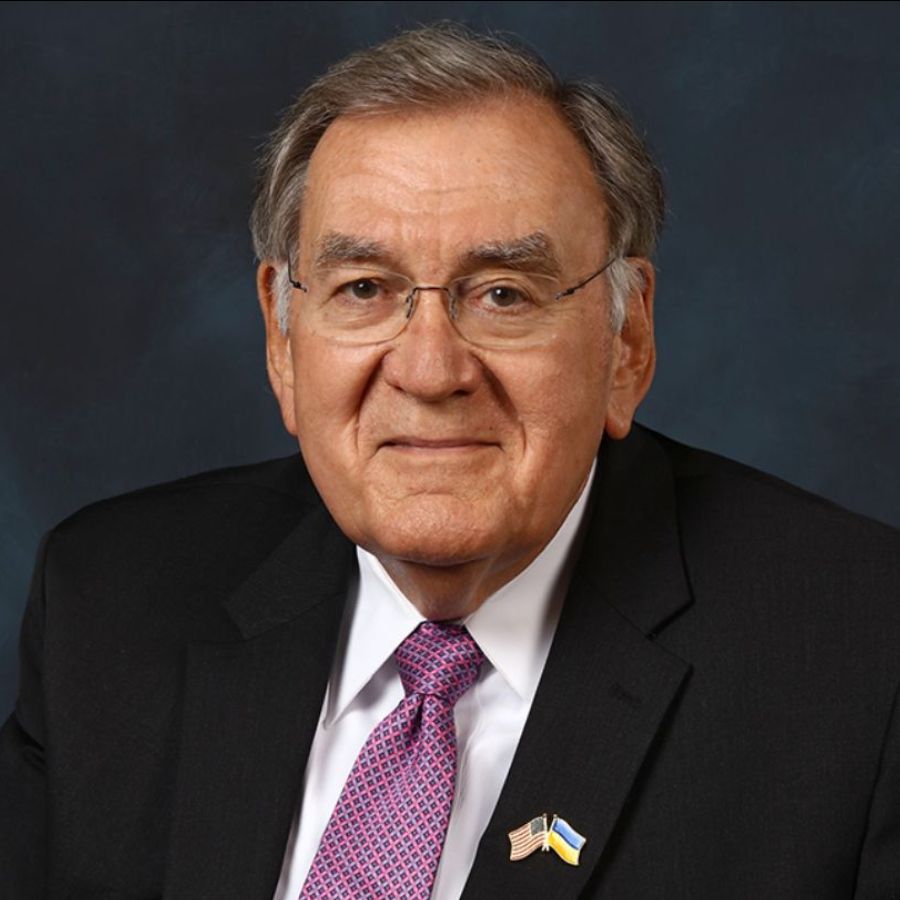
ROBERT MCCONNELL
Co-Founder, U.S.-Ukraine Foundation
Director of External Affairs, Friends of Ukraine Network
This introduction is Mr. McConnell’s and does not necessarily reflect the views of the U.S.-Ukraine Foundation or the Friends of Ukraine Network (FOUN).