
Robert A McConnell 09.01.2026
Among the things you can count on from Vladimir Putin is his ability and propensity to lie.
David Kramer, former U.S. assistant secretary of state for democracy, human rights, and labor, and former deputy assistant secretary of state for European and Eurasian Affairs, and member of the U.S.-Ukraine Foundation’s Friends of Ukraine Network (FOUN), has published an excellent article in The Hill discussing Putin’s lying and its implications relating to Ukraine.
Hopefully, we are all aware of the systemic Russian propaganda operation and try to identify where it so often successfully finds its way into news stories and congressional – and other federal officials’ statements and thinking.
With so many major stories unfolding as the new year begins, I believe it is important that we keep in mind Putin’s manipulative lies, and I recommend David’s piece.
__________________________________
THE HILL
Don’t fall for Putin’s lies on Ukraine
by David J. Kramer, opinion contributor - 01/08/26 1:30 PM ET
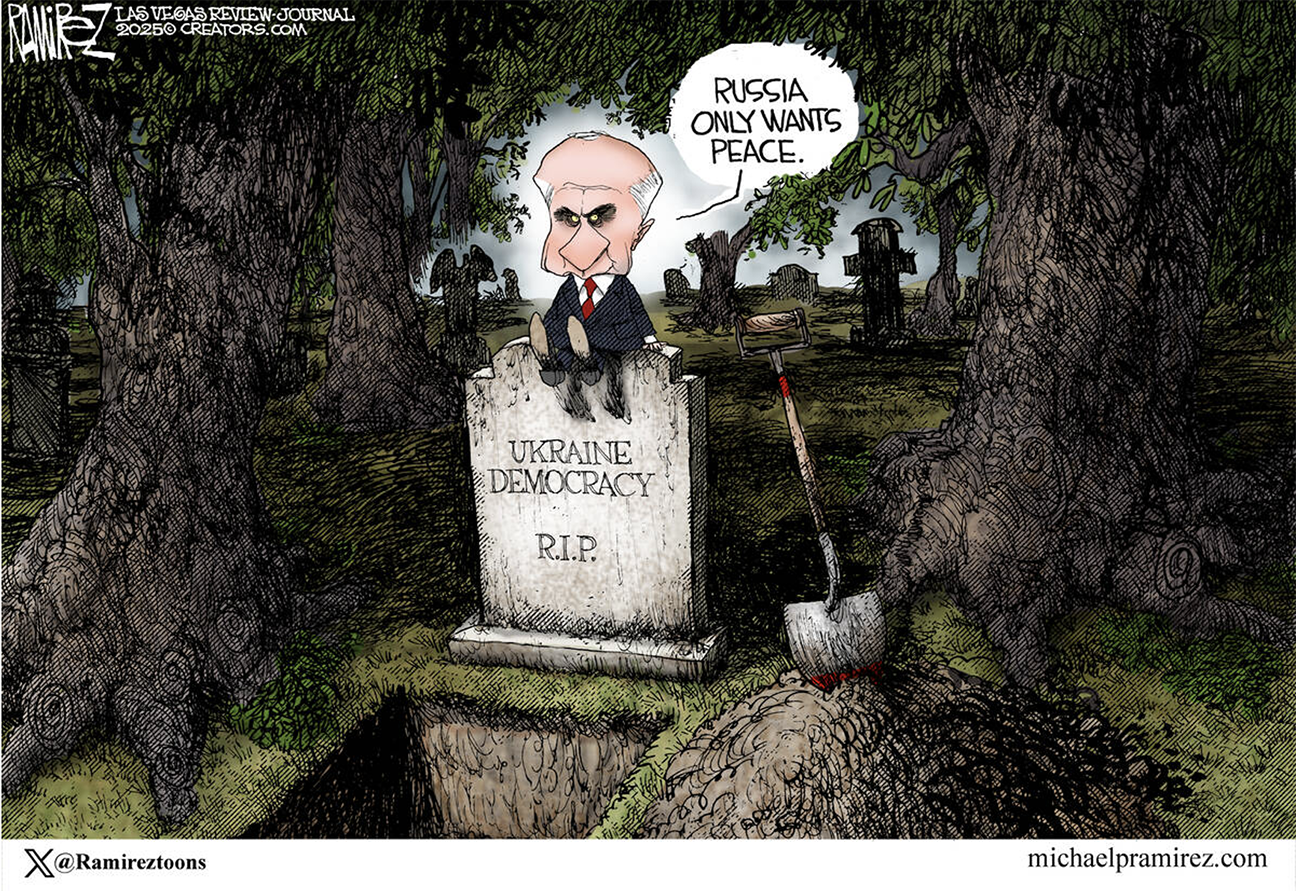
Before developments in Venezuela dominated the news over the weekend, Vladimir Putin and his accomplices in the Russian government were caught in a bold-faced lie as 2025 wound down. In a call Dec. 29 with President Donald Trump, Putin claimed that Ukraine had tried to bomb one of his residences in Valdai, in the Novgorod region, just a day after Ukrainian President Volodymyr Zelensky met with Trump in Mar-a-Lago to flesh out a plan to stop the war that Russia started.
The Ukrainians immediately denied the Russian accusations, and the CIA backed that up, briefing Trump that the Russian claims were fabricated. After initially expressing anger about the alleged attack following his conversation with Putin, Trump seemed to realize that Putin, once again, was “tapping him along” when he shared on social media a New York Post editorial with the headline “Putin ‘attack’ bluster shows Russia is the one standing in the way of peace.” On Jan. 4, Trump told reporters while aboard Air Force One, “We don’t believe that happened now that we’ve been able to check.”
This, of course, is not the first time Putin has lied or made delusional claims. Putin thinks he’s winning the war and that he can outlast Western support for Ukraine. The first part of that thinking is similarly built on lies. Russian military and intelligence officials continuously feed Putin wrong information about the progress of the war. Of course, they thought that the war would be over in a matter of days, too.
The entire war Russia launched against Ukraine has been built on lies: claims that ethnic Russians living in Ukraine were being abused, even killed; that Ukraine was being run by Nazis; or that NATO enlargement was a threat to Russia.
Putin also lied if he told Trump that he wanted Ukraine to “succeed.” Putin has never recognized Ukraine as a truly independent state. “It’s an artificial country created back in Soviet times,” he told President George W. Bush back in 2008. And Putin certainly doesn’t want to see it succeed as a thriving democracy seeking closer ties with the West. Such a Ukraine would pose a threatening alternative to the rotten, corrupt, fascist state that Putin oversees in Russia.
Instead, Putin wants to destroy Ukraine, reclaim it as part of a revived Russian empire, overthrow its duly elected leadership, and force its population into submission. Putin is not interested in ending the war that he initiated against Ukraine unless he achieves those objectives. He dredged up the false claim that Ukraine targeted one of his residences to use as a pretext for why he won’t support the latest U.S.-driven efforts to end the war.
Putin’s lies and delusions have proven to be very costly, certainly for Ukraine but also for Russia. According to the Ukrainian open-source mapping project DeepState,Russian forces occupied 4,336 square kilometers (1,674 square miles) of additional Ukrainian territory in 2025. That is less than 1 percent of Ukraine’s territory that Russian gained last year. That is an abysmal showing given that Russia’s losses in the war with Ukraine last year increased faster than at any time since 2022.
Over the past nearly four years since Russia’s full-scale invasion of Ukraine in Feb. 2022, Russia has incurred more than 1.2 million killed and wounded, according toUkrainian assessments. This is a staggering number that exceeds American losses in World War II. Those in the West who think Russia is winning the war base their conclusion on Russian disinformation and lies.
Russia’s very ability to sustain the war is in question. As the exiled independent media outlet Meduza has reported, “After two years of war-fueled growth, Russia’s economy is slowing to near zero.” Low oil prices led the Russian Central Bank to warn of possible budget cuts.
Meanwhile, according to a new poll published Dec. 29, 76 percent of Ukrainians, exhausted though they are from Russia’s aggression and daily assaults on civilian targets, consider it unacceptable to recognize Russian-occupied Ukrainian territories as part of Russia in exchange for ending the war. Zelensky must adhere to the views of the Ukrainian people, and they want a just and sustainable peace, one where Russia will not attack again. U.S. officials need to bear this in mind before pressuring Ukrainians into territorial compromises — compromises, which it should be understood, would involve several million people, not just territory.
In his New Year address delivered from Kyiv, Zelensky declared, “We want the end of the war — not the end of Ukraine…Does that mean we are ready to surrender? Those who think so are deeply mistaken. And clearly, over all these years, they still have not understood who Ukrainians are.”
Ukrainians are a heroic people on the frontlines of freedom. They deserve our military, political and economic support. The United States should not be a neutral arbiter in this war; instead, we should clearly stand on Ukraine’s side against Russia. Only by helping Ukraine win the war might Putin and his forces on the frontlines realize that his war, built on lies, is pointless.
David J. Kramer is executive director of the George W. Bush Institute, former U.S. assistant secretary of state for democracy, human rights, and labor, and former deputy assistant secretary of state for European and Eurasian Affairs.
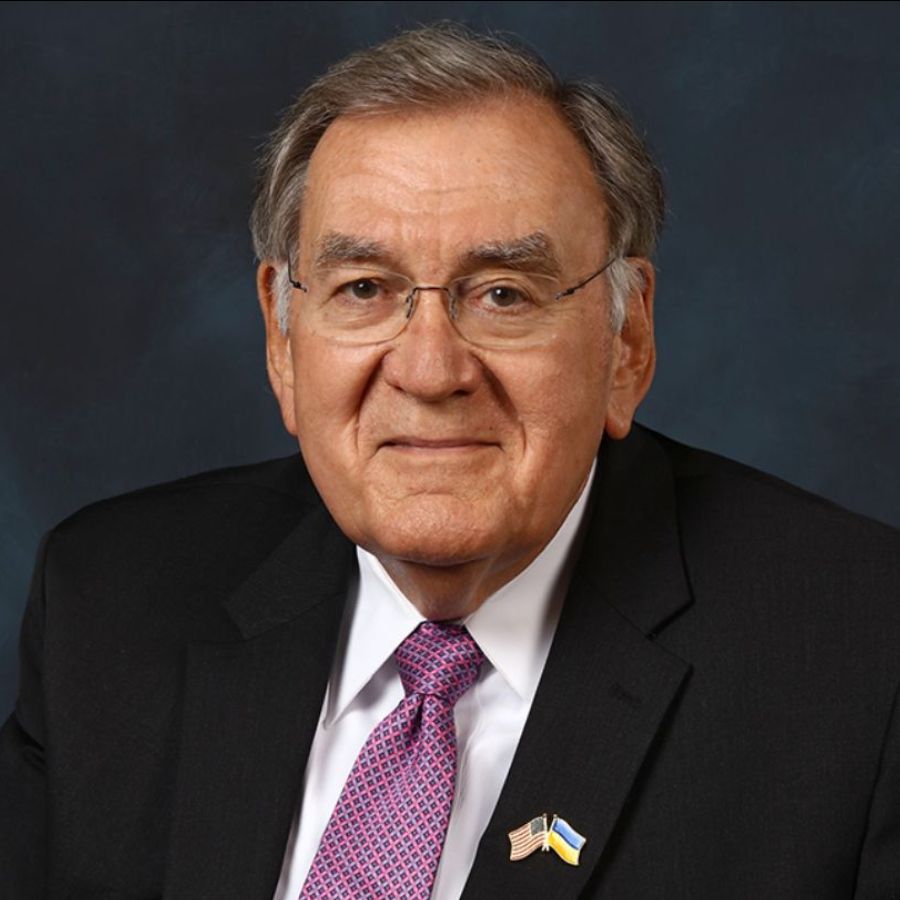
ROBERT MCCONNELL
Co-Founder, U.S.-Ukraine Foundation
Director of External Affairs, Friends of Ukraine Network
This introduction is Mr. McConnell’s and does not necessarily reflect the views of the U.S.-Ukraine Foundation or the Friends of Ukraine Network (FOUN).