
As has been reported, President Trump has invited the war criminal and dedicated enemy of the United States to the upcoming G20 meeting in Florida. One cannot find words to describe how outrageous such an invitation is, whether or not Putin attends.
As the invitation was extended and every day since the genocidal Russians were and have continued to target and kill citizens of Ukraine including children. Ukraine defends itself by targeting Russia’s economic engine for its war machine, its oil infrastructure and military installations, and Russia targets private citizens.
Instead of expressing outrage and supporting Ukraine in this war, our President invites Putin to Florida.
Below I set out an open letter to our Administration stating that, at the very least, if Putin attends, there must be conditions. David Kramer, author of the letter, is a former Deputy Assistant Secretary of State for Ukraine, Russia, Belarus, and Moldova and a member of the U.S.-Ukraine Foundation’s Friends of Ukraine Network (FOUN).
KYIV INDEPENDENT · OPINION
Open letter to the US administration: The G20 invitation to Putin should come with conditions
By David J. Kramer | October 8, 2026, 9:15 PM
Former Deputy Assistant Secretary of State for Ukraine, Russia, Belarus, and Moldova
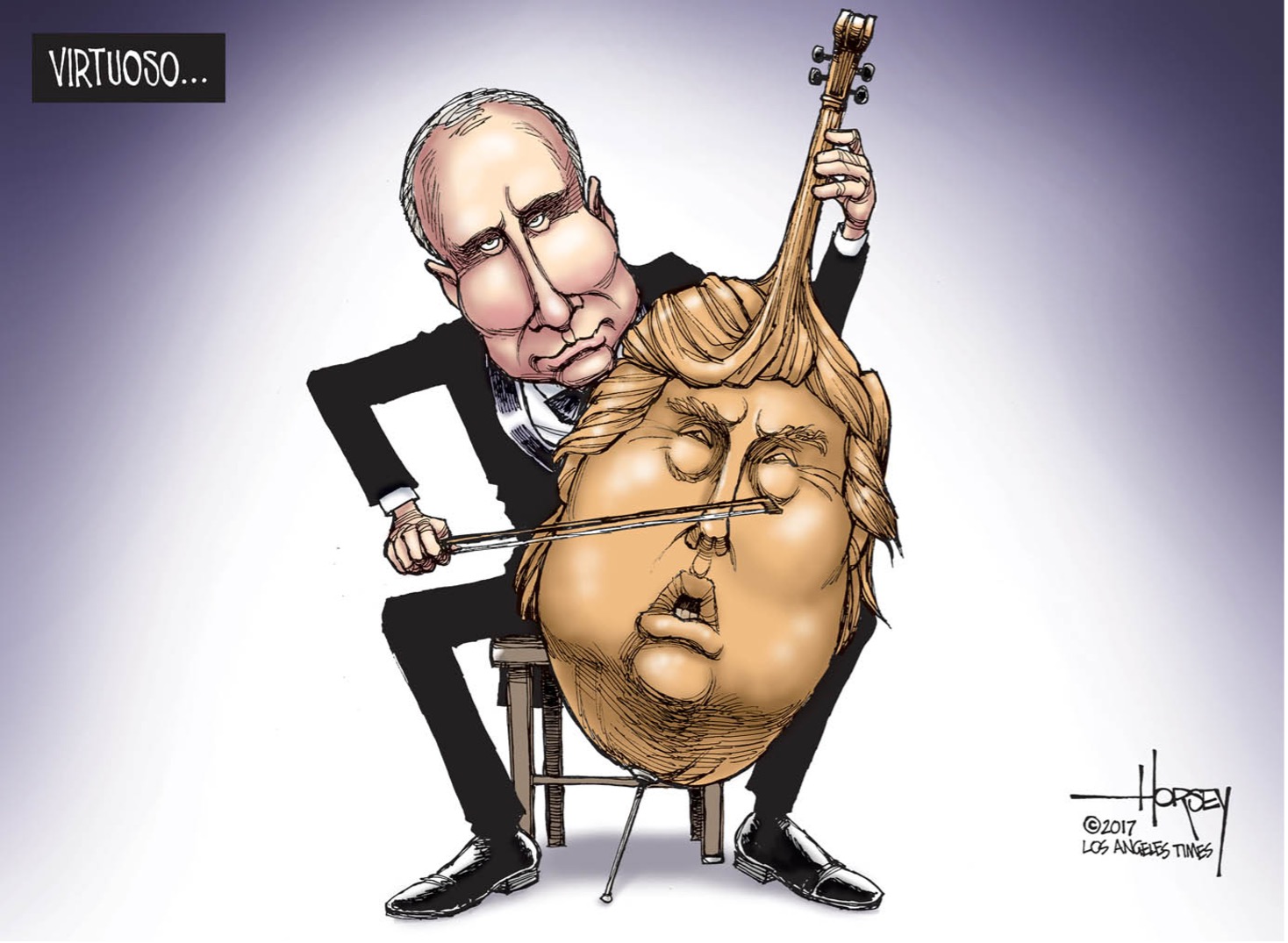
The Trump administration recently announced that it has invited Russian President Vladimir Putin to December's G20 summit in Miami.
This invitation erodes the well-deserved isolation of Putin for his brutal and unprovoked invasion of Ukraine. Putin last appeared on U.S. soil for a bilateral meeting with President Donald Trump in Anchorage, Alaska, in August 2025. That meeting produced no progress toward ending the war that Putin started against Ukraine.
If anything, the Russian bombardment of Ukraine has only increased over the past year.
Ukrainian President Volodymyr Zelensky, not Putin, is the leader who should be invited to the G20 gathering. Zelensky leads a country of incredibly brave and determined people whose fight for their freedom should inspire us all.
"The only issue on which G20 leaders should engage Putin is ending his war against Ukraine."
If the invitation to Putin is not rescinded, as a bipartisan group of U.S. Senators urged, it should be made conditional on the following two points:
First, Putin should announce and observe an immediate, unconditional, and full ceasefire to the war he started, not simply one restricted to energy facilities, as proposed by President Trump, but rejected by Putin. He should not be allowed to set foot on U.S. soil again as long as his forces continue to attack Ukraine.
Second, Putin should commit to meeting face-to-face at the G20 with President Zelensky, along with President Trump and leaders from the European Union, to negotiate a permanent end to the war.
European nations have borne the brunt of assistance to Ukraine after direct aid from the United States ended last year, and they deserve a seat at the table. Any negotiation should ensure the full sovereignty and territorial integrity of Ukraine, the return of Ukrainian prisoners of war and kidnapped children, the right for Ukraine to determine its own future, and reparations for the damage Russia has caused.
Putin started the war against Ukraine in 2014, not just in 2022, and bears responsibility for the deaths and injuries of hundreds of thousands of Ukrainians, to say nothing of more than 1.5 million Russian soldiers.
Putin has been indicted by the International Criminal Court for war crimes, specifically for directing the targeted abduction of tens of thousands of Ukraine's children and their transport into Russia. He created the worst security crisis on the European continent since World War II, and it is he who refuses to end the fighting.
President Zelensky and Ukraine, by contrast, have repeatedly demonstrated flexibility and willingness to end the war, though not on the condition of Ukraine's capitulation to Russia.
At last month's United Nations gathering, 51 countries backed Ukraine in a joint statement, urging the Kremlin to agree to a full ceasefire and enter meaningful negotiations. Russian Foreign Minister Sergei Lavrov countered that Russia would not pause its "special military operation" even during negotiations, once again illustrating that Russia, not Ukraine, is responsible for prolonging this war.
As the group of bipartisan Senators noted, allowing Putin to participate in a G20 Summit in the United States "raises serious concerns about legitimizing and normalizing a government that continues to attack Ukrainian civilian targets every day."
President Zelensky stated that the invitation for Putin to attend the G20 meeting could be “one of the best opportunities proposed by the U.S. side. I believe this is an opportunity for a trilateral meeting that could yield results."
When Secretary of State Marco Rubio announced the invitation to Putin, he described it as "an opportunity for him (Putin) to engage not just with the (American) president but with other world leaders." The only issue on which G20 leaders should engage Putin is ending his war against Ukraine.
If Putin agrees to that, then the Trump administration will deserve credit for helping end the war Putin started. However, in the more likely scenario that Putin doesn't agree, he should stay in Moscow, while the West ramps up assistance for Ukraine and tightens sanctions on Russia to help Ukraine achieve victory.
We welcome others to join in this call.
Ian Brzezinski, Former Deputy Assistant Secretary of Defense for Europe and Policy
Michael Carpenter, Former U.S. Ambassador to the OSCE, Former NSC Senior Director for Europe
Kim Davis, Founding Partner, Charlesbank Capital Partners
Orest Deychakiwsky, Former Senior Advisor, U.S. Helsinki Commission
Evelyn N. Farkas, Former Deputy Assistant Secretary of Defense for Russia, Ukraine, Eurasia
Donald Jensen, Johns Hopkins University
George Kent, Former U.S. Ambassador to Estonia
David J. Kramer, Former Deputy Assistant Secretary of State for Ukraine, Russia, Belarus, and Moldova
Nadia McConnell, President, U.S.-Ukraine Foundation
Robert McConnell, co-founder, U.S.-Ukraine Foundation
William Taylor, Former U.S. Ambassador to Ukraine
Editor's note: Affiliations are for identification purposes only. The opinions expressed in the op-ed section are those of the authors and do not purport to reflect the views of the Kyiv Independent.
ROBERT MCCONNELL
Co-Founder, U.S.-Ukraine Foundation
Director of External Affairs, Friends of Ukraine Network
The introduction is Mr. McConnell’s and does not necessarily express the views of the U.S.-Ukraine Foundation or the Friends of Ukraine Network (FOUN).