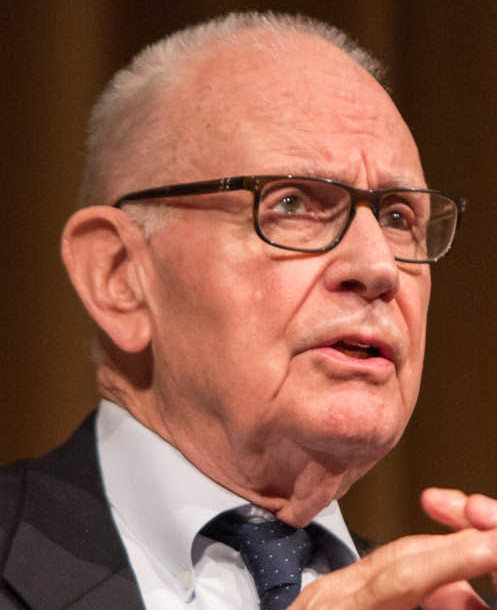
Appropriately, much will be written about former congressman Lee Hamilton, who passed away earlier this week at the age of 94. The Indiana Democrat who served in Congress for 34 years enjoyed well-deserved bipartisan respect for his integrity and foreign policy expertise.
There are and will be full obituaries in national and other media, but Hamilton’s passing brings back memories for the U.S.-Ukraine Foundation, and I believe one is especially worth sharing.
In April 1991, with the support of the United States Information Agency, we brought to the United States the first republic-specific delegation from the Soviet Union, a delegation of 13 recently elected deputies to Ukraine’s Verkhovna Rada for a two-week Conference on the American System of Governance for Ukrainian Legislators. The delegation included leaders of Rukh which was the “movement” leading toward independence as well as two leading Communist members of the Verkhovna Rada, indeed including the Deputy Chair of the Rada.
The first week of the program focused on state and local government in Indiana where Mr. Hamilton and his staff were helpful our scheduling to Indiana officials. The program then moved to Washington, DC and a packed schedule with officials in all three branches of our government.
Our schedule included a meeting on the morning of April 10 with Mr. Hamilton who was, at the time, Chairman of the House Foreign Affairs Subcommittee on Europe and the Middle East.
Under any circumstances, a meeting with the chair of this subcommittee would have been sought. However, this was early 1991 and there was an undercurrent of change suggesting Ukraine might be on its way to seeking independence and many American officials and publications were arguing either caution or expressing opposition to such a rupture in the USSR.
Chairman Hamilton was on record as being against Ukraine seeking to sever its ties to the Kremlin and when I asked to bring the delegation in to see him he agreed and wanted to have the meeting in the subcommittee’s hearing room and arranged as an informal hearing – he on the dais and the delegation along a witness table with several opening statements and then his being able to ask questions.
The chairman and his subcommittee’s chief of staff, Michael Van Dusen, sat on the dais, and the members of the delegation selected two or three of their number to make opening statements which covered several issues but clearly indicated their desire to break from “the center” (Moscow).
At that point, Mr. Hamilton asked probing questions exploring why these Ukrainian parliamentarians sought sovereignty and independence. The answers were considered and compelling.
Questioning all members of the delegation, Mr. Hamilton discovered the opinions on sovereign and independent did not vary, whether he was questioning Rukh members or prominent Communists; their views on the need to break from “the center” and have governance of Ukraine in Ukraine were unanimous.
Later that day, Mike Van Dusen called me and, seemingly somewhat surprised, told me that based upon the morning discussion, Chairman Hamilton had changed his view on Ukraine seeking independence.
Indeed, from that day on, Mr. Hamilton’s reconsidered view was evident in meetings, hearings, and other discussions.
To remind of the context I note this meeting was in April 1991.
The Verkhovna Rada passed its Declaration of Sovereignty in July 1991.
It then passed Ukraine’s Declaration of Independence in August 1991, conditioning independence on a national referendum to be held on December 1, 1991, and that referendum established Ukraine’s independence with a 92% majority.
With Ukraine’s independence, Congressman Hamilton urged early recognition, supported legislation like the Nunn-Lugar Act, and pushed for policies that prioritized long-term U.S. interests by engaging with free capitals such as Kyiv and Vilnius rather than solely focusing on Moscow.
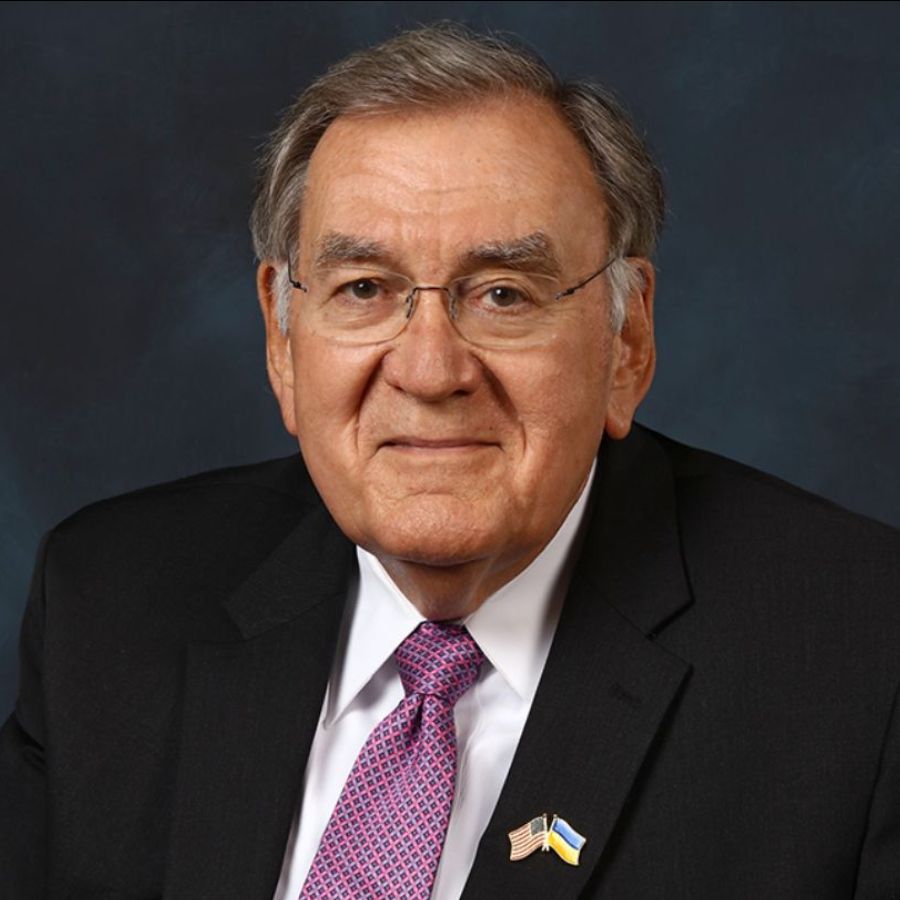
ROBERT MCCONNELL
Co-Founder, U.S.-Ukraine Foundation
Director of External Affairs, Friends of Ukraine Network
This write-up is Mr. McConnell’s and does not necessarily represent the views of the U.S.-Ukraine Foundation or the Friends of Ukraine Network (FOUN).