
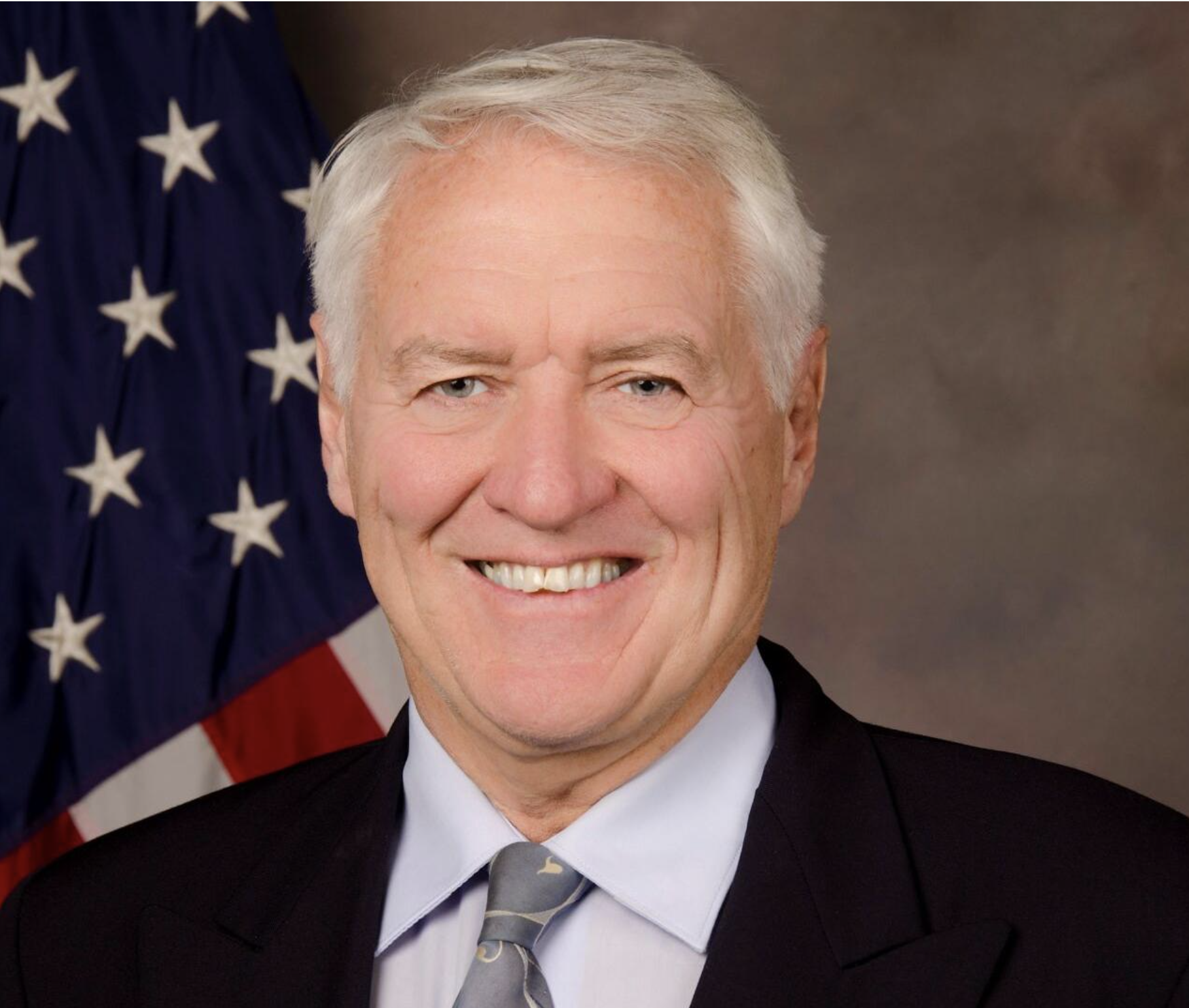
Jon Gundersen – The United States’ first official representative to Ukraine on the anniversary of the full-scale invasion. The first American government official sent to Ukraine was Jon Gundersen, who arrived in 1991. He was the United States Charge d’affaires to Ukraine. In the time before independence, we – the U.S.-Ukraine Foundation – enjoyed our relationship with Jon, learning his insights and sharing information. He was a wonderful representative of the United States to the people of Ukraine. Recently, he published an op-ed published in the Charleston Post & Courier (South Carolina's largest newspaper) on the anniversary of Putin’s full-scale invasion. It is set out below.
On February 25th, 2022 - exactly 4 years ago today - Russian forces approached the outskirts of Kyiv, the Ukrainian capital. They had an overwhelming advantage in manpower and equipment over their seemingly overmatched foe. In the mind of Russian President Putin, Ukraine was not a country and Ukrainians were not a people; they were merely "Mala Rus" - small Russians. Ukrainians would ultimately welcome their Russian Big Brother as Liberators. Therefore, Putin expected a quick and bloodless victory. In fact, Russian forces packed their dress uniforms for a triumphant parade in Kyiv. Yes, Western countries might protest and institute meaningless sanctions. They would, in the end, accept reality: Ukraine was part of the Russian Empire or, at a minimum, part of the Russian sphere of influence.
What happened? Western nations, with the United States in the lead (at least initially), assisted Ukraine politically, economically and militarily. Most importantly, the soldiers and people of Ukraine fought valiantly to defend their homeland. The cost of this tragic war has been enormous - on both sides. Russia and Ukraine together have suffered some 2 million military casualties (killed, injured or missing); approximately 1/2 million have been killed in action. For comparison, in all America's wars since 1776, fewer Americans have died than Russians and Ukrainians in four years of war. As a matter of policy Russia continues to bomb non-military targets from elementary schools to maternity wards. Over 20,000 Ukrainian children have been kidnapped and forced to forget their heritage. Today, in the coldest winter in a decade, Russia is destroying Ukraine's energy infrastructure.
So, how to end the largest war on the European continent since World War 2? On the campaign trail President Trump repeatedly stated he would "end the war in 24 hours". For the American President there were no good guys and bad guys. Just two combatants who would welcome a reasonable deal to end a costly and horrible war. Therefore, Trump appointed two trusted advisors, his son-in-law, Jared Kushner, and New York real estate mogul, Steven Witkoff, to negotiate Ukraine's fate (Russian and Ukrainian experts were deliberately excluded). Some territory would be swapped, business deals would be made, the killing would stop and a Nobel Prize would be awarded.
What could go wrong? The author of the "Art of Deal" no doubt is aware of a cardinal rule of negotiations: know thy enemy, his intentions, his mind set and his "cards". However, the Russian dictator believes he is winning the war and, thus, has no incentive to negotiate seriously. Unlike a democratic leader, Putin feels no pressure from a war weary public or an independent press. In addition, the Russian people have an infinite ability to suffer (just ask Napoleon and Hitler).Therefore, Putin believes, with some justification, that President Trump will ultimately accept the Kremlin's terms. After all, Washington has already cut off almost all aid to Ukraine. During over a year of negotiations, Witkoff and Kushner have pressured only Ukraine to make concessions. In fact, the initial 28 Point American Peace Proposal echoes Russian Talking Points.
How then to "win" the negotiations? In a moral universe, Russia would withdraw from all Ukrainian territory, pay war reparations and Putin would be tried as a war criminal. Unfortunately, that ain't gonna happen. As he has repeatedly proven, Putin is not prone to make concessions when he thinks he is winning.
How then to convince Putin that time is no longer on his side? As a former KGB operative, Putin only understands the language of force. Militarily our European allies are (finally) dedicating a larger percentage of their GNP on defense, including helping Ukraine. Sweden and Finland, two powers with a ready military posture, have joined the Alliance. NATO is now beginning to provide long range missiles that can strike deep into Russian territory. Economically Western sanctions are (finally) beginning to affect the average Russian. The Russian civilian economy is stagnant. Combined the US and Europe have over 20 times the GDP of Russia. In fact, Germany, the UK and France all have larger GDPs than Russia. So does California. The price of oil, Moscow’s main export, has tanked on the world market. Politically Russia suffers from a severe “brain drain." While the Russian people cannot choose their leaders, they can vote with their feet. Perhaps 1 million, including many young people in the IT sector, already have fled the country. On the other hand, the Ukrainian people are our greatest asset. They are fighting an existential battle. Of course, they want the war to end; but not on Moscow’s terms.
To use the President's own words, Ukraine and its allies hold the trump “cards.” So how to play these cards? First, any agreement should not be dictated by Washington and certainly not by Moscow. It must be negotiated and accepted by Kyiv. Second it must include a cease fire in place (no Ukrainian territory not held by Russia) and iron clad security guarantees (Western troops on the ground, backed by American intelligence, etc). Third, it must be backed by continued delivery of Western military and economic assistance. Fourth, and this is the critical element, Putin needs to know that Ukraine and its allies have all the advantages: determination and morality backed by much larger and growing NATO forces and economies. And we are determined to win the game.
As he has done in the past, Putin would most likely reject such a proposal. However, he may come to realize that the consequences of continuing may outweigh any temporary gains. As a student of history, Putin is well aware that when strong men fall they fall fast. Witness Nicholas II, the last Russian Czar, or Bashar Assad in Syria or Nikolas Maduro in Venezuela. With this in mind, Putin may cut a deal to maintain power. The odds, of course, are long. But they may become shorter with a losing hand.
And the American President? With a long term commitment backed by a strong hand, he could win the game, i.e., a strong and independent Ukraine. In such a case, President Trump would, deservedly, be awarded his long sought Nobel Peace Prize. But don't bet on it.
ROBERT MCCONNELL
Co-Founder, U.S.-Ukraine Foundation
Director of External Affairs, Friends of Ukraine Network
The introduction is Mr. McConnell’s and does not necessarily reflect the views of the U.S.-Ukraine Foundation or the Friends of Ukraine Network (FOUN).