
VOICE OF AMERICA
The economic benefits are doubtful, the political consequences are significant. Experts on the U.S.-Russia diesel deal
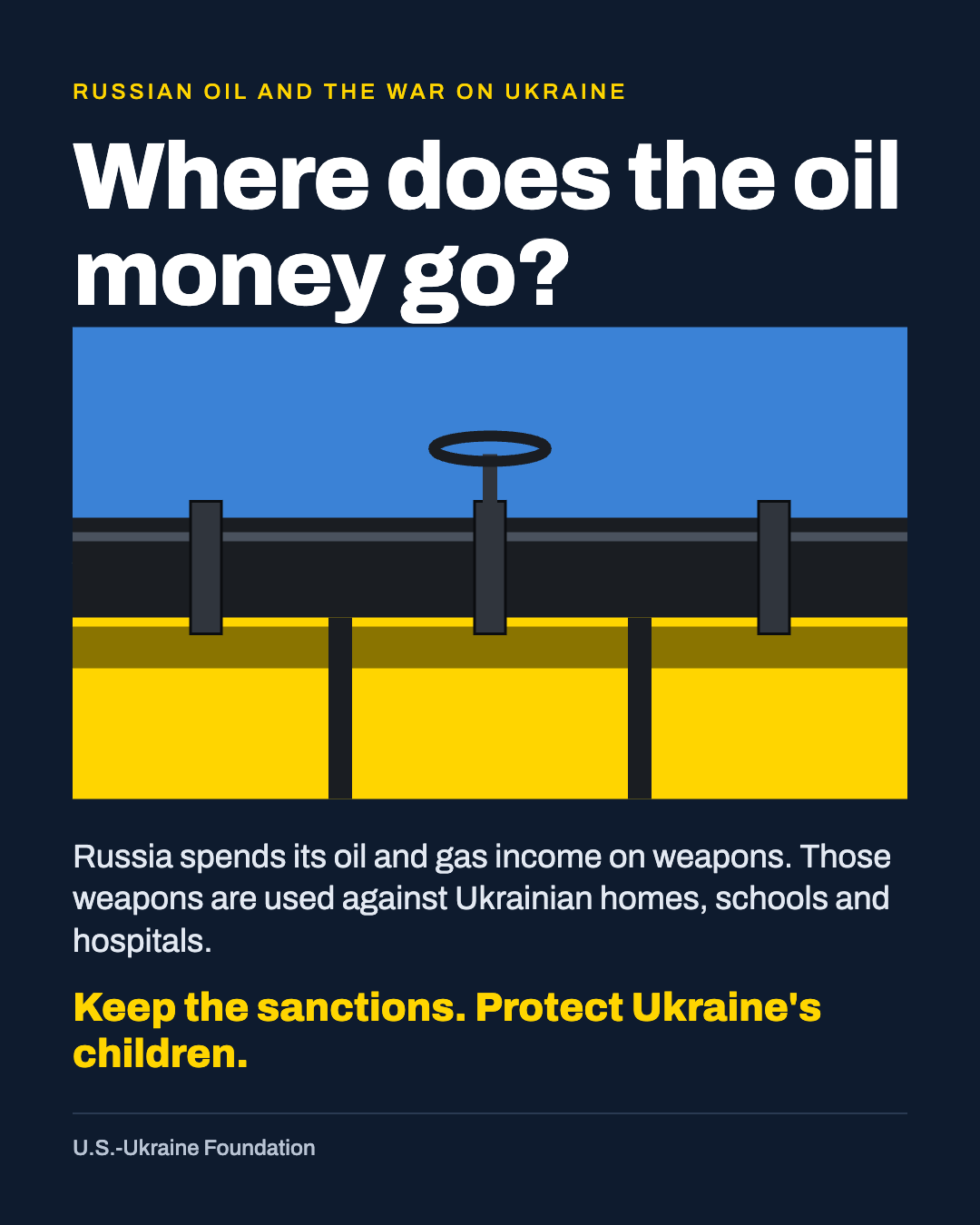
The supply of Russian diesel fuel to the United States is unlikely to help reduce fuel prices for Americans, according to experts interviewed by journalists of the Ukrainian service of the Voice of America.
Analysts believe that the agreement announced by President Trump may bring economic and political benefits primarily to Russia, and may negatively affect support for Ukraine.
On October 11, the US President announced an agreement with Russia to supply diesel fuel to the American and world markets. Donald Trump said that these agreements will help "rapidly reduce" diesel prices for Americans and for the whole world.
Economic implications: deal unlikely to affect US prices
Edward C. Chow, a fellow at the Center for Strategic and International Studies (CSIS) in Washington, believes that a potential purchase of Russian diesel does not make economic sense for the United States and will have little to no impact on domestic prices.
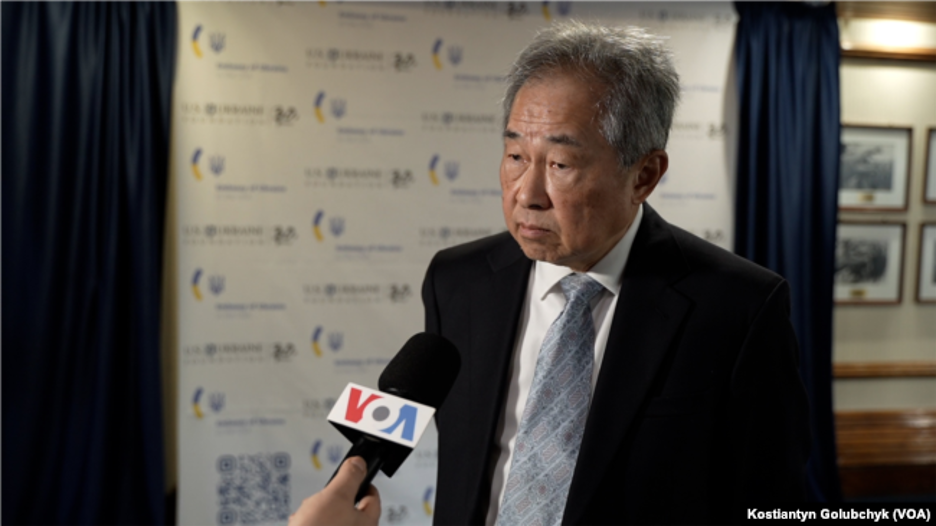
According to him, the United States is one of the largest exporters of diesel fuel in the world, so the need to import diesel from Russia raises questions.
"The United States is a major exporter of diesel fuel, so why would they import or buy Russian diesel? It doesn't make any sense," Chow said in an interview with the Ukrainian service of the Voice of America.
The expert noted that the volumes of potential supplies in question may be only about 10% of the volume of all American diesel fuel exports.
The rise in diesel prices in the United States, according to the analyst, is primarily due to the rise in the price of crude oil in the world and the peculiarities of the operation of American oil refineries, which focus primarily on the production of gasoline.
According to Edward C. Chow, at the beginning of the year, oil cost about $60 per barrel, while now, at the time of the interview, its price has exceeded $100 per barrel. The expert attributes this, in particular, to the actions of the US presidential administration regarding Venezuela and Iran.
American refineries are set to maximize gasoline production, the expert says.
"Because of this, the prices of diesel fuel — which is actually considered a by-product — are also rising under the pressure of circumstances: factories are striving to produce more gasoline, because that is what they are equipped for. For the American oil refining sector, diesel fuel is a surplus product, which is why we export it," the analyst says.
In his opinion, Donald Trump's announcement of the diesel deal has more symbolic and political significance than economic significance.
"The only thing that will not matter is whether the United States imports Russian diesel fuel or not," expert Edward C. Chow emphasizes.
Director of the George W. Bush Institute, David Kramer, also doubts that the supply of Russian diesel fuel will help overcome the energy crisis.

"The idea of relying on Russia to solve the energy problem is wrong. This will provide Putin with the means to continue the war (against Ukraine - ed.) and will not really solve the global energy crisis," Kramer said.
Kramer calls the situation in the Middle East the main reason for the current rise in energy prices, in particular, problems with supplies through the Strait of Hormuz.
Kramer also recalled that Russia imposed restrictions on the export of diesel fuel even before the Ukrainian armed forces began attacking Russian refineries. The expert recalls the shortage of fuel in the domestic market of Russia, which is why Moscow extended the export ban until the end of October.
Political Implications Are Significant - Experts
“Russia benefits from this because it is a signal to buyers of Russian oil — like China, India or Turkey — not to worry about Graham's sanctions law.” — Edward C. Chow
Despite the dubious economic benefits for the United States, Edward C. Chow believes that a potential diesel deal is beneficial to Russia because it sends an important political signal to buyers of Russian energy resources.
"Russia will benefit from this because it is a signal to large buyers of Russian oil — for countries like China, India or Turkey — not to worry about the Graham Sanctions Act, signed a few weeks ago," the analyst says.
According to Chow, the announcement of the intention to buy Russian diesel fuel may give the impression that Washington does not intend to increase sanctions pressure on Moscow and countries that buy Russian oil.
The expert recalls that in 2022, the US Congress banned the import of Russian oil, so he calls President Trump's announcement controversial.
According to David Kramer, the White House's decision should also be considered in the context of US domestic policy.
The United States is on the eve of the midterm elections to the Senate and House of Representatives, the expert notes, and the Trump administration is interested in lowering energy prices.
"The White House is interested in lowering energy prices, because there are only about three weeks left before the midterm elections in the United States, and the cost of energy has become one of the main political issues in the country. Voters are concerned about the problem of affordability," the expert analyzes.
At the same time, Kramer warns that trying to solve energy problems by cooperating with Russia may not give the expected result for Washington, but will instead provide additional resources for Moscow.
The expert is particularly concerned about reports in the Financial Times about the possibility of the United States terminating intelligence sharing with Ukraine and curtailing the PURL (List of Priority Needs of Ukraine) mechanism, a system for purchasing American weapons for Ukraine.
"I don't understand why the pressure is only on one side - the one on whose side, in my opinion, we should be," Kramer said.
He stressed that the exchange of intelligence information is mutually beneficial: Ukraine also transfers important information to the United States, in particular, about the situation inside Russia.
John Herbst, a senior expert at the Atlantic Council, also warns against a possible termination of intelligence sharing between the United States and Ukraine. According to him, this would deal a serious blow to Ukraine's defense capability and at the same time contradict Washington's interests.
"Cutting off the supply of intelligence would be a critical blow to Ukraine's defense capabilities, and therefore a critical blow to US interests. That would be an extremely unwise step," Herbst said.
The FT reported in an article on October 12 that the US presidential administration is putting pressure on European capitals and Kyiv to force Ukraine to stop deep strikes on Russian energy infrastructure. Citing "officials who received calls from US representatives on Saturday and Sunday," the publication writes that Washington threatens to stop the Purl procurement system, which provides Ukraine with weapons, and stop sharing intelligence with Ukraine.
Voice of America asked the White House to comment on the message, but there was no response at the time of publication of this article.
Consequences for Ukraine: weakening support and additional pressure on Kyiv
Edward C. Chow does not see tangible economic consequences for Ukraine from potential supplies of Russian diesel to the United States. At the same time, he points to the negative political consequences of such an agreement for Ukraine.
“This indicates a weakening of support for Ukraine from the administration, which is already not very powerful.” — Edward C. Chow
"From a political point of view, this is very bad. This indicates a weakening of support for Ukraine from the administration, which is not very powerful anyway," the expert said.
According to Chow, the announcement of the agreement with Russia is another signal that the Trump administration is putting pressure on Kyiv to demand a cessation of hostilities, instead of increasing pressure on Moscow.
Kramer, for his part, stressed that any agreements on the so-called energy truce will not have a result without Russia's consent.
"The problem is not in Ukraine. The problem is in Moscow, in the person of Putin; It is he who refuses to end this war. It was he who started it and it is he who refuses to finish it," said the director of the George W. Bush Institute.
Kyiv is ready for an energy truce, but is waiting for Moscow's response
After announcing the diesel agreement with Russia, US President Donald Trump announced an "energy truce" between Kyiv and Moscow.
On October 11, Ukrainian President Volodymyr Zelenskyy told American journalists that the announcement of the truce came as a surprise to him.
On October 12, the press secretary of the President of Russia did not confirm the agreement to the truce, but said that "contacts continue."
Ukraine supports the US proposal for a ceasefire "with great enthusiasm", is ready for negotiations and is waiting for specific details of the proposal and the reaction of the Russian side. This was stated in a comment to the Ukrainian service of the Voice of America by Chargé d'Affaires of Ukraine in the United States Denys Senik.
"We immediately said that we were waiting for details and, above all, for a reaction from Moscow. So far, the reaction is that, unfortunately, people continue to suffer and are left without electricity, without water supply," the Ukrainian diplomat said.
According to him, Kyiv has repeatedly publicly called for an end to strikes on energy infrastructure and confirmed its readiness to discuss this issue in any format and anywhere except Moscow and Minsk.
Senik also noted that after the announcement of the US president's energy truce, Russia continued to attack Ukrainian energy facilities. In particular, Senik mentioned the strike on an energy facility in Kharkiv on October 11 and the subsequent attack on the gas plant.
"Our position is clear: we do not attack energy facilities on the territory of Russia, and Russia does not attack energy facilities on the territory of Ukraine," Senik said.

ROBERT MCCONNELL
Co-Founder, U.S.-Ukraine Foundation
Director of External Affairs, Friends of Ukraine Network