The following opinion piece from The Economist has been brought to my attention (published August 27th). Its author is Radek Sikorski, Poland’s foreign minister and deputy prime minister – and husband of Anne Applebaum.
I could not agree more; he describes the “neurosis” that has kept the much stronger West destructively deterred, while the much weaker but bellicose Putin, Russia’s war criminal-in-chief, finds growing weakness in the West.
THE ECONOMIST · BY INVITATION | STANDING UP TO PUTIN
Europe cannot protect Russia from itself
Fear of Vladimir Putin going fully rogue has paralysed the West for long enough, writes Radek Sikorski
Aug 27th 2026 | 5 min read
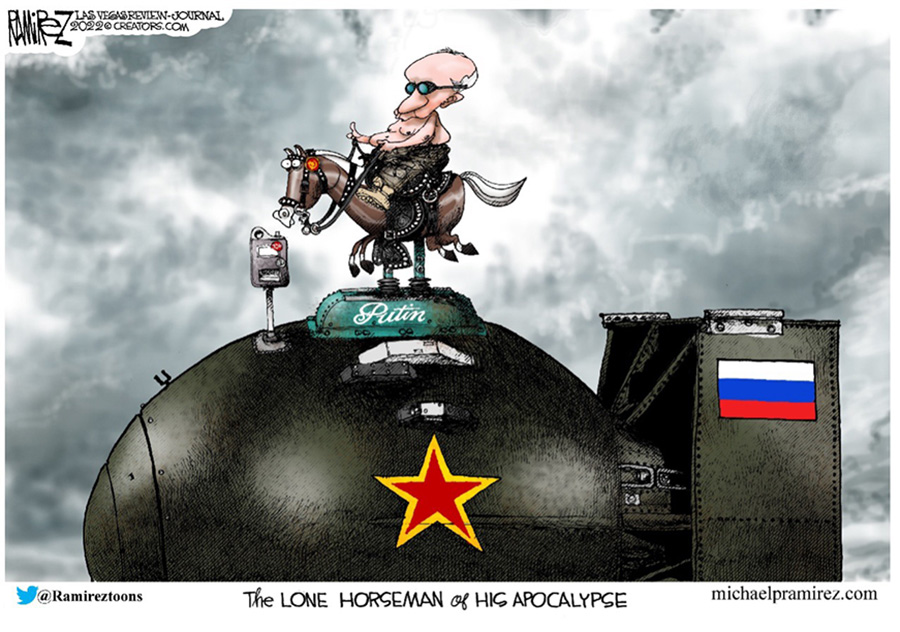
“THE WORLD is a healthier but not a safer place,” wrote The Economist in 1953 after the death of Joseph Stalin. This newspaper was not alone in its apprehension. Well-known Russian totalitarianism seemed somehow more manageable than whatever the future held. Fast-forward seven decades and the sentiment has changed little. No matter what the Kremlin does, fears that, if resisted, it may do something even more reckless are still used as an argument for caving in to Russian demands.
Take a conversation with Andrey Melnichenko, a Russian oligarch, published recently in these pages. He acknowledged that Vladimir Putin had made mistakes but argued that whatever comes next could be worse still; that Russia, if pushed too hard, might “descend into chaos” or even “use a tactical nuclear weapon”. The bottom line was clear: let Russia do as it pleases, or else. It is a dead-end approach.
For years after the fall of the Soviet Union, the West bent over backwards not to humiliate Russia and to turn it into a responsible international stakeholder. In 1997 alone, Moscow was invited to join the G7, signed the NATO-Russia Founding Act and entered into a Partnership and Co-operation Agreement with the European Union. In the post-Soviet era, each American presidential administration has tried to bring Russia into the fold by signing treaties, looking its leader deep in the eyes or pressing reset buttons. So did former Soviet satellite states, including Poland.
In 2009 Mr Putin was invited to attend ceremonies in Poland to commemorate the 70th anniversary of the outbreak of the second world war. My country introduced a visa-waiver programme for Russians living close to our border in the Kaliningrad exclave. The heads of the Russian Orthodox and Polish Roman Catholic churches called jointly for “forgiveness of wrongs, injustice and every evil committed against each other”. I am still personally vilified by our opposition for saying that I could imagine a genuinely democratic Russia joining NATO, once it met all the criteria.
We all tried. And we were all turned down.
Today, Russia is again trying to get its way by threatening escalation. It recently warned Britain of “consequences” for providing Ukraine with military assistance. The visit to Moscow of John Ratcliffe, the CIA director, in August was allegedly an attempt to warn the Kremlin against assaulting a NATO member state.
And yet, while the Russian leader displays no willingness to reach any peace deal—save Ukraine’s capitulation—still too many refuse to acknowledge the reality. Some argue that Russia has become so weak under mounting economic and military pressure that the West should negotiate before the regime collapses, or worse, before the state fragments and produces even more dangerous successors to Mr Putin. Others insist that Russia should not be pushed too far because it might resort to further escalation, including in the nuclear domain. Both arguments are misguided.
Fears that sustained pressure would result in the state’s break-up are overstated. Russia’s highly centralised political system has made its regions economically, administratively and financially dependent on Moscow. Millions of citizens rely on transfers from the federal budget, and even resource-rich regions depend on centrally controlled transport and energy infrastructure. Russia is not the Soviet Union. Outside the North Caucasus, ethnic Russians remain an overwhelming majority, and the memory of economic crisis and political chaos that accompanied the Soviet Union’s dissolution continues to dampen separatist sentiments. Last but not least, the country has been heavily centralised for centuries. Even in the event of a leadership crisis, or a grave military setback, the more likely consequence would be a struggle within the ruling elite to control the centre, not a dissolution.
Threats of escalation—issued either by the authorities or suggested by allegedly concerned oligarchs—are not reactions to new crises but part of a long-established playbook. Today, as in the past, Russia is testing the West by force. The Soviet Union used limited attacks to expose opponents’ strengths and weaknesses before launching a larger offensive. The Kremlin still applies the same principle. In its current fight against Western democracies, it deploys drones, cyber-attacks, sabotage, GPS interference and information warfare. The question is no longer whether Russia is probing NATO. It is whether NATO understands that it is being probed, and what signal it intends to send to prevent grey-zone actions from turning into full-fledged confrontation.
The Kremlin operates on a simple assumption: not that Russia is stronger, but that democratic adversaries will hesitate to test its vulnerabilities. Europe should therefore resist the temptation to engage in premature negotiations. Those calling to reopen political dialogue may hope that discussions will eventually reduce tension. In the long run the opposite is true. Dialogue begun before Russia’s strategic position has weakened sufficiently may strengthen the Kremlin’s domestic legitimacy, encourage further hybrid operations, undermine European support for Ukraine and deepen divisions within our democratic community.
The uncomfortable truth is that Europe must accept greater risk in the short term to avoid far more serious dangers in the future. Our objective cannot be merely to avoid escalation. It is to convince Mr Putin that escalation will get him nowhere, and that we are willing to sacrifice more than money to stand up for ourselves. European leaders’ primary responsibility is to protect their people from Russian threats, not to protect Russia from itself.
Russia regards us as the enemy and wants to destroy our democratic civilisation. We should not rush to appease it. When Mr Putin is ready for peace he will find a way to communicate it. ■
Radek Sikorski is Poland’s foreign minister and deputy prime minister.
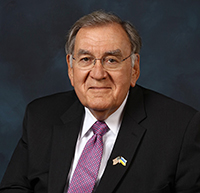
ROBERT MCCONNELL
Co-Founder, U.S.-Ukraine Foundation
Director of External Affairs, Friends of Ukraine Network
The introduction is Mr. McConnell’s and does not necessarily represent the views of the U.S.-Ukraine Foundation and/or the Friends of Ukraine Network (FOUN).