
Potemkin Village: 1787. 2013. 2026.
For 240 years, Russia has run the same Potemkin playbook. Only the audience changes.
A “Potemkin village” is a pretty façade built to hide an ugly truth. The phrase was born along the lower Dnipro River, in lands Russia had recently conquered from the Crimean Khanate. The same lands Russia occupies again today and wants to annex.
Here is the history of three Potemkin villages. The third one has just been built.
1787 · Dnipro River, southern Ukraine
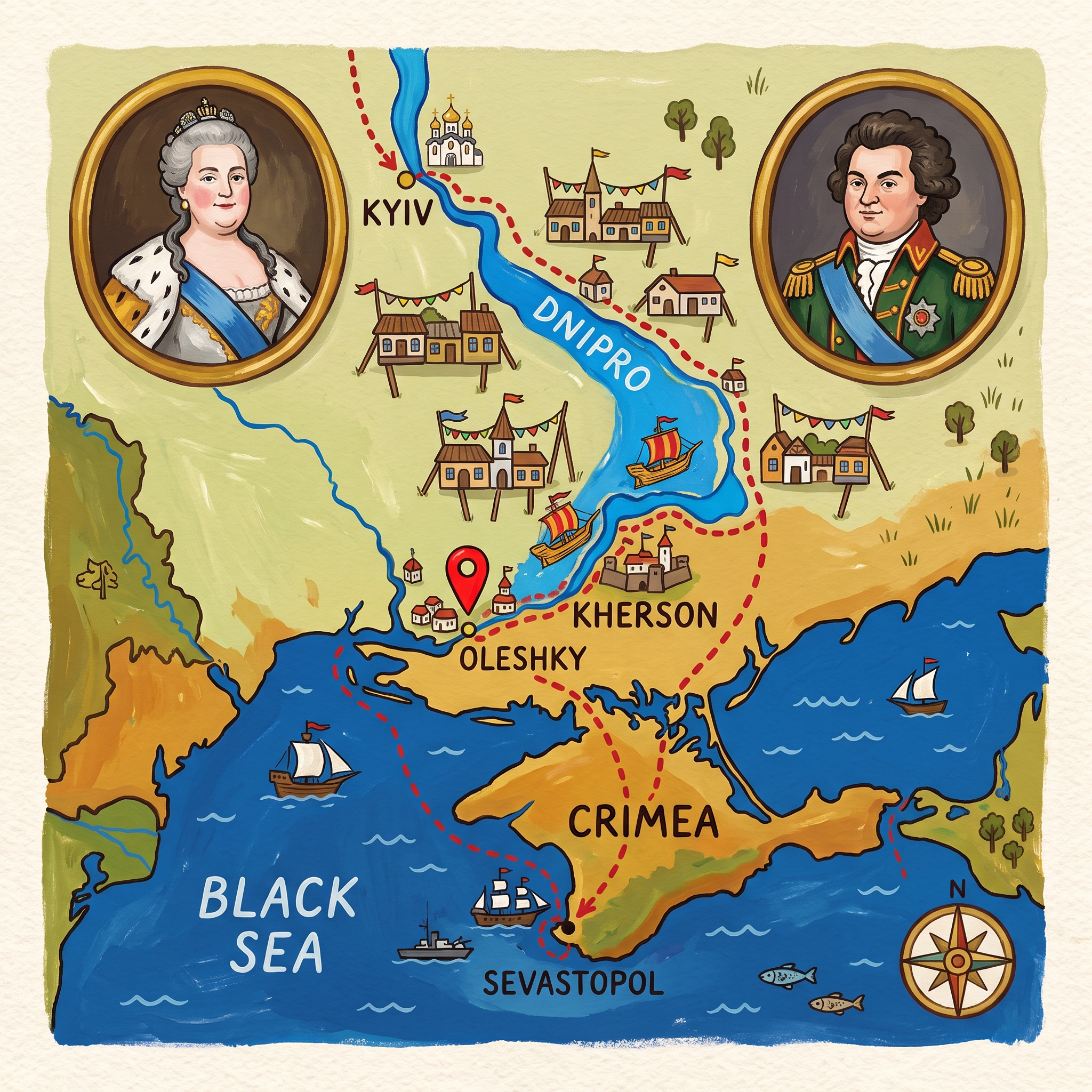
Built to impress foreign ambassadors
Four years after annexing Crimea, Catherine the Great sailed down the Dnipro to show off her newly occupied lands in southern Ukraine. Foreign envoys traveled with her. Her governor there, Prince Grigory Potemkin, decorated the towns along the route, including Kherson, across the river from modern-day Oleshky, to make them appear prosperous.
The famous tale of fake villages came from a foreign diplomat who was not on the trip. While the villages and the decorations were real, the prosperity was not. The show was put on to impress the foreign ambassadors, to prove to them that Catherine's conquest was a success.
2013 · November · Suzdal, Russia
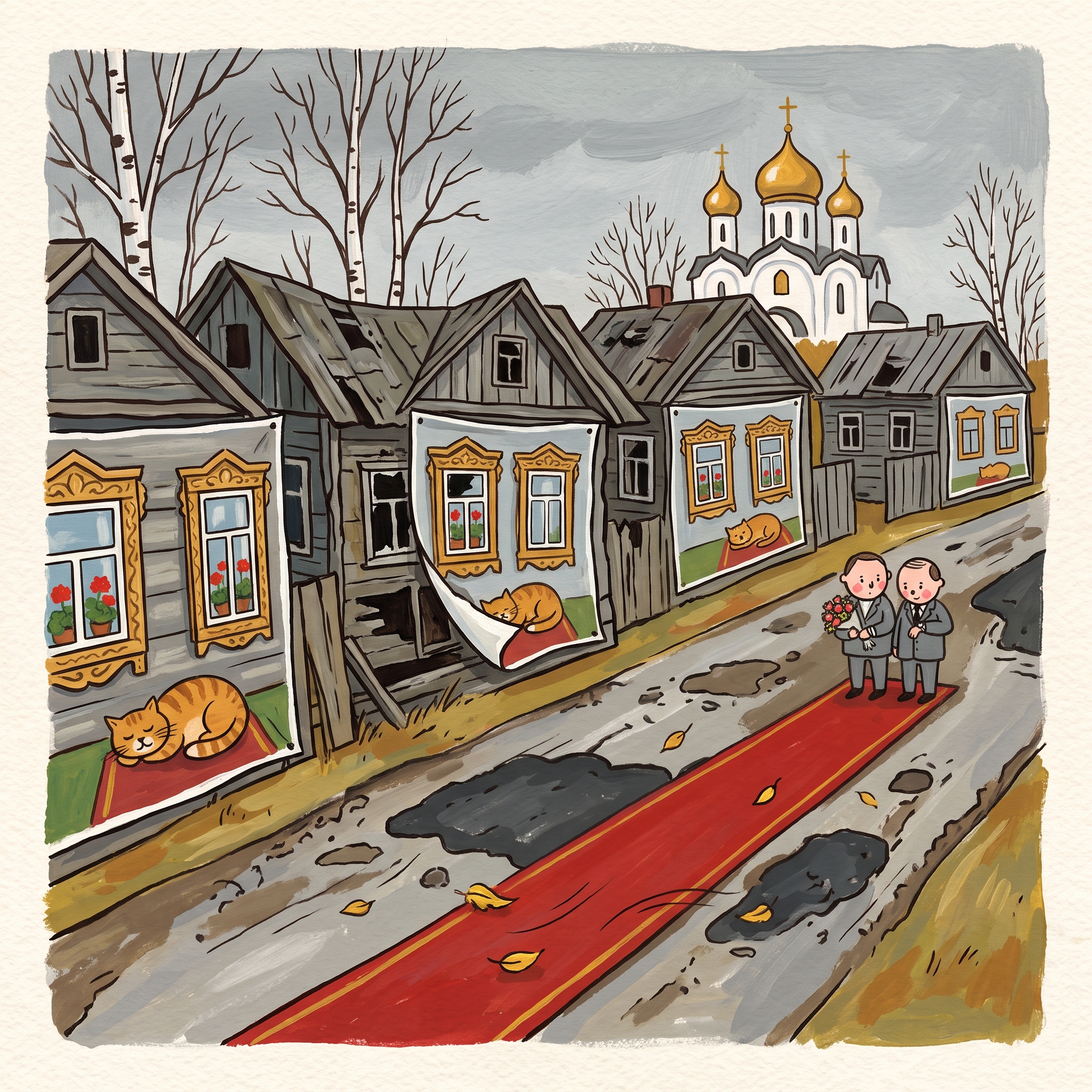
Built to impress Putin
Ahead of Vladimir Putin's expected visit to a national conference of local officials, authorities in this UNESCO-listed town covered rotting wooden houses with printed banners of neat facades: carved window frames, flowerpots, even a cat on the sill.
Putin never came. The banners came down. The wooden houses continued to rot.
2026 · Oleshky, Kherson region, Ukraine
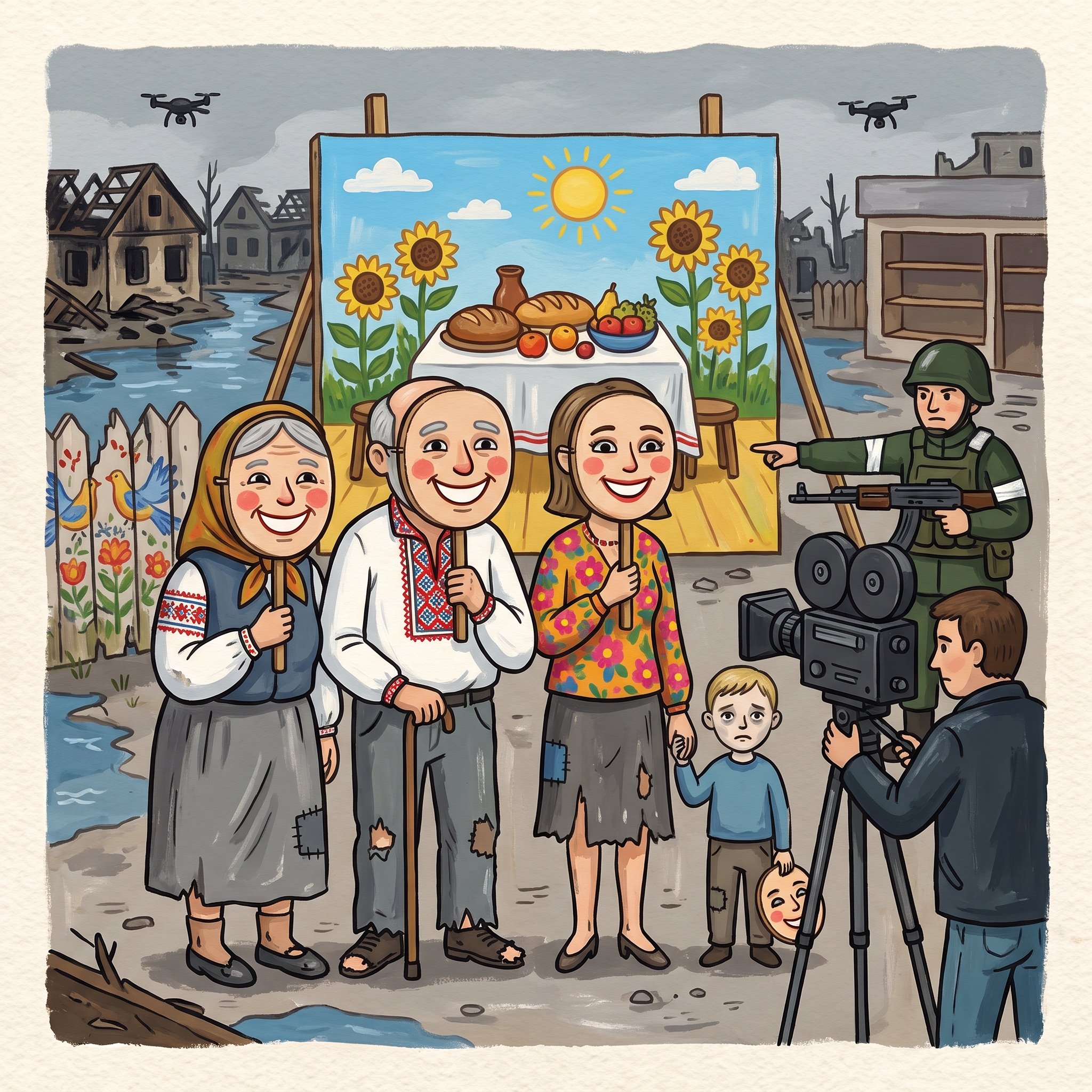
Built to fool the world
Same Ukrainian river, same Ukrainian lands, once again occupied by Russia. In Russian-occupied Oleshky, people are starving, having received no regular food deliveries since May. The roads are mined and drones fly overhead. For months, Russia refused to allow an evacuation. A temporary ceasefire for aid and evacuation began only on October 27.
Now another Potemkin façade is going up. On September 30, Ukraine's Foreign Minister said that after months of deprivation, Russia is forcing residents to declare on camera that they are “happy, well-fed, and grateful.”
The Potemkin playbook
1787: to impress foreign ambassadors.
2013: to impress Putin.
2026: to fool the world.
When videos of smiling, well-fed residents of Oleshky appear, filmed by the one camera crew Putin will let in, remember the truth behind the happy façade: months of Russia’s purposeful starvation of Oleshky residents. Share this page so others too will know that Russia is putting a Potemkin Band-Aid on a raw and open wound.
Behind the set: Oleshky, the real town
A Cossack town on the Dnipro
In 1711, Zaporozhian Cossacks set up the Oleshky Sich on the left bank of the lower Dnipro River. The town was founded in 1784, one year after Russia first annexed Crimea, as the empire settled the lands it had just conquered. In 1928 the Soviets renamed it Tsiurupynsk, after a Bolshevik official. Ukraine restored the name Oleshky in 2016. In 2023, the Russian occupiers brought back the Soviet name.
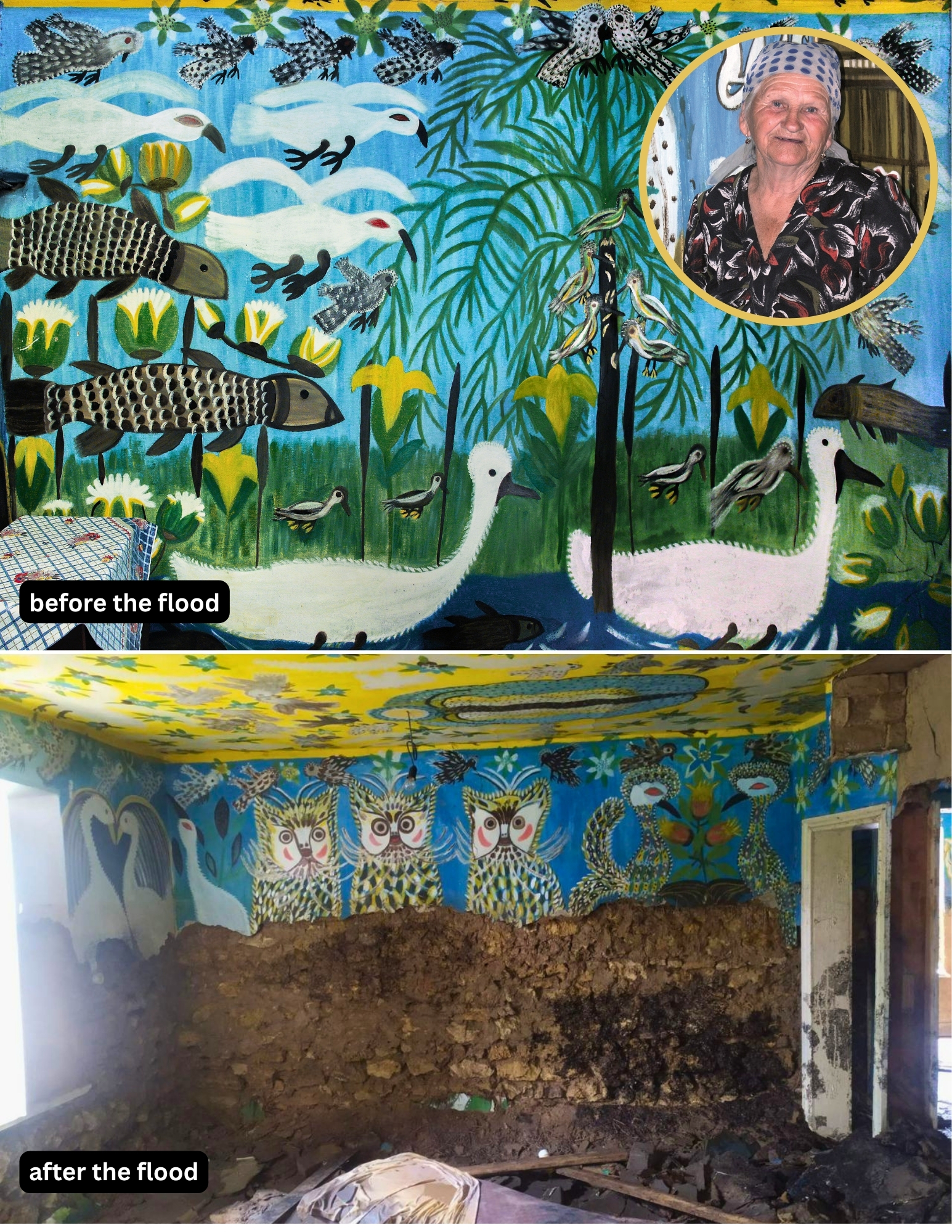
The painted house of Polina Raiko
Oleshky was home to one of Ukraine's most beloved folk artists. Polina Raiko picked up a brush in 1998, at age 69, after losing her husband and daughter. Until her death in 2004 she covered the walls, ceilings, doors, and fence of her small house with birds, flowers, saints, and scenes from her dreams. In 2021, her murals were officially recognized as a cultural monument. In June 2023, when Russian forces blew up the Kakhovka dam upriver, the house went under water. When the flood receded, less than half of her paintings had survived.
What Russia’s “liberation” brought
Before: the population of Oleshky was about 24,000.
February 24, 2022: Russian troops forcibly occupied the town on the first day of the full-scale invasion.
June 2023: the Kakhovka dam was blown up while under Russian control. Oleshky flooded up to the rooftops, and an AP investigation found that hundreds of residents died. Water, electricity, and gas never came back.
Today: Ukrainian officials estimate that between 2,000 and 6,000 people remain in the town and nearby villages, most of them elderly, as well as about 200 children. The White House puts the number at 1,700 to 2,000, including about 50 children. No food aid has arrived since May 26, 2026. People eat grass and weeds. About 100 bodies lie in the hospital basement. Locals call the only road out of town “the road of death.”
October 2026: on Friday, October 16, Pope Leo XIV called Russian President Vladimir Putin, expressed deep concern over the humanitarian crisis in Oleshky, and urged a ceasefire to allow food, medical aid, and the safe evacuation of civilians. On October 23, the White House announced that Melania Trump had mediated a ceasefire. It took effect on October 27.
Been there, done that
In 1783, Russia annexed Crimea and the lands around Oleshky. In 1787, Russia staged a show to impress foreign ambassadors, to convince them that the conquest was a success. In 2014, Russia again annexed Crimea. In 2022, Russia again occupied Oleshky. The Potemkin playbook has not changed in 240 years: occupy, ruin, then stage a show to convince the world that everything is fine.
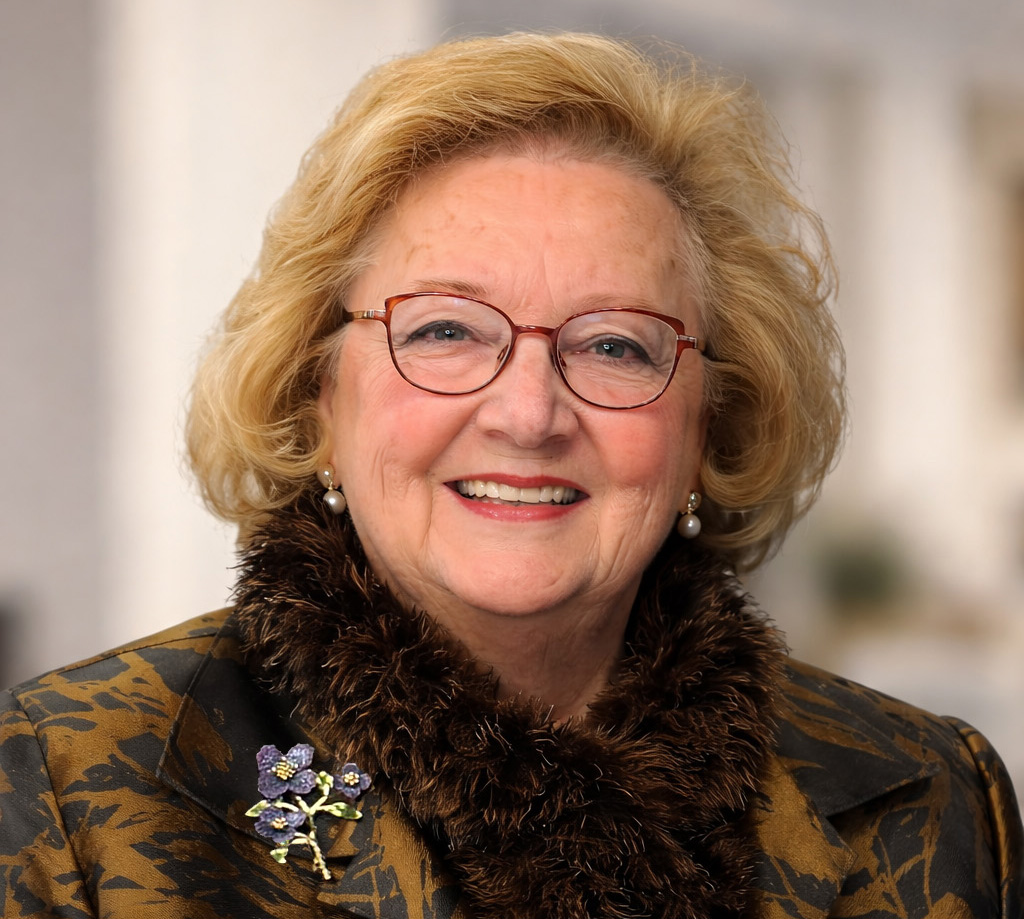
NADIA K. McCONNELL
Co-Founder and President, U.S.-Ukraine Foundation
The views in this article are Mrs. McConnell’s and do not necessarily represent the views of the U.S.-Ukraine Foundation and/or the Friends of Ukraine Network (FOUN), or of anyone associated with them.
Sources: Encyclopædia Britannica; Simon Sebag Montefiore, Prince of Princes: The Life of Potemkin; BBC News (Nov. 26, 2013); Hyperallergic and Babel (June 2023); European Heritage Awards (2026); Euronews (Sept. 28, 2026); LIGA.net (Sept. 30, 2026); The Kyiv Independent (Oct. 1, 2026); Associated Press (Oct. 17, 2026); Kyiv Post (Oct. 27, 2026). Illustrations are symbolic.
Winter Relief Mission


Phase One: Ukraine Airlift
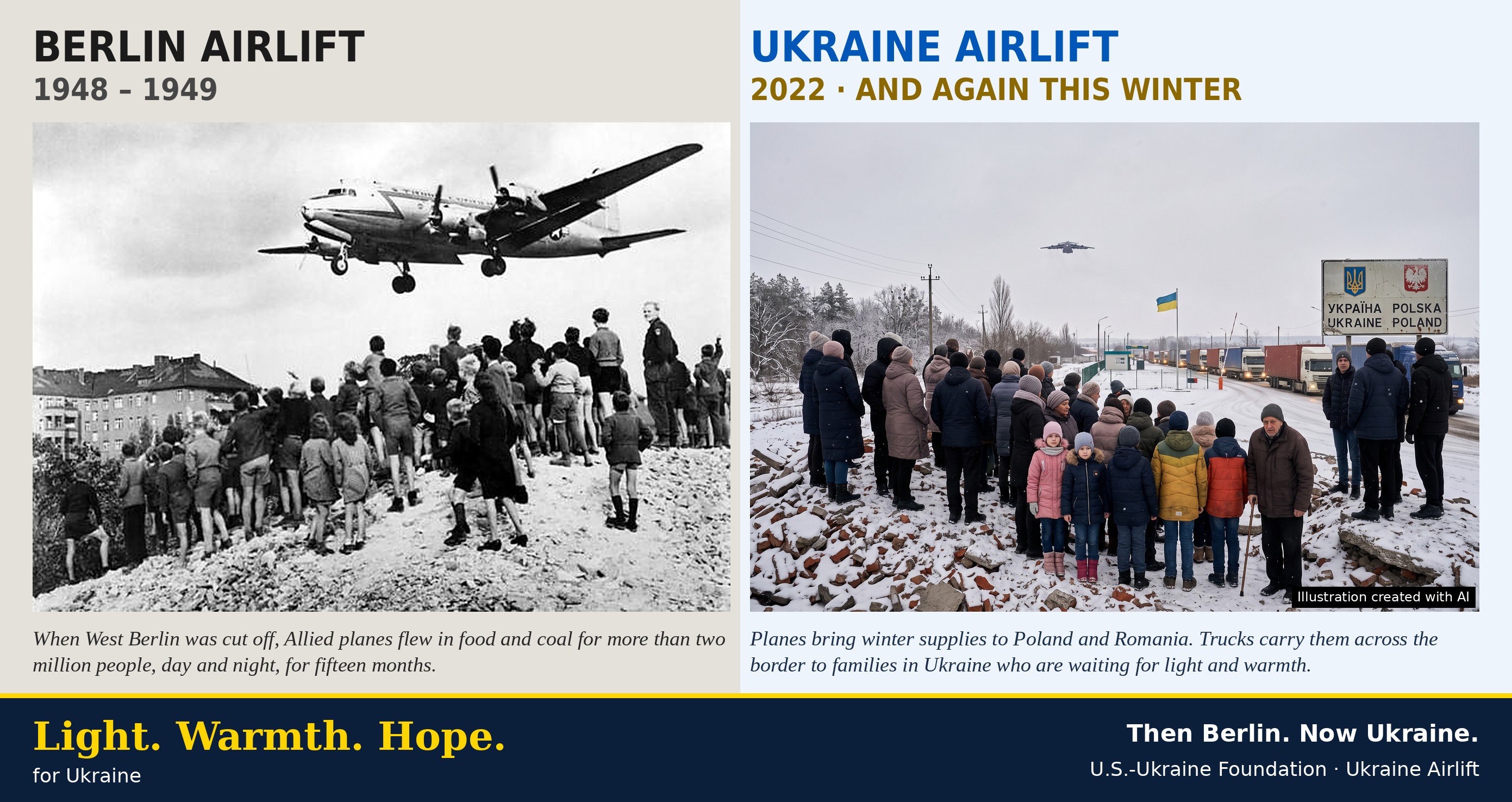
Together with TAPS Ukraine and Mental Help Global, the U.S.-Ukraine Foundation is relaunching the Ukraine Airlift of 2022. Hats with rechargeable lights, warm socks and gloves, rechargeable hand warmers, and food kits will travel by air and by sea container to Poland, then by truck into Ukraine, to reach children and the most vulnerable.